Beyond the Resume Why LinkedIn Ads Matter for Cincinnati Businesses
As a business owner in the Cincinnati area, you're probably balancing sales, staffing, service delivery, and the constant pressure to keep marketing moving. A lot of owners still think of LinkedIn as the place people update job titles or connect after a chamber event. That view leaves money on the table.
For B2B companies, healthcare groups, law firms, manufacturers, and professional service providers around Cincinnati, LinkedIn can put your message in front of the people who make buying decisions. If your ideal customer is an operations director in Blue Ash, an HR leader in Mason, or a healthcare executive across the river in Northern Kentucky, LinkedIn gives you a cleaner path to reach them than most social platforms.
The challenge isn't whether LinkedIn can work. The challenge is choosing among the many types of LinkedIn advertising without wasting time or budget. At HDM, we help Cincinnati businesses sort through that every day, especially when they're deciding how paid media fits alongside web design, SEO, and broader growth strategy.
This guide gives you a practical breakdown of the formats that matter most, what each one does well, where each one falls short, and how to use them locally. If you want a broader outside perspective on campaign strategy, BAMF insights for B2B advertisers is a useful companion read.
1. Sponsored Content (Native Ads) Best for Brand Awareness and Thought Leadership
A Cincinnati owner approves a LinkedIn budget, the ads go live, and the first question shows up fast. Are the right people seeing us, or are we paying for attention that never turns into a conversation?
Sponsored Content is usually the first format we test when a local business needs visibility with decision-makers. It runs directly in the LinkedIn feed, so it gives you a chance to show expertise in the same place your audience reads industry updates, hiring news, and peer content. For Cincinnati companies that sell into healthcare, manufacturing, legal, finance, or professional services, that matters. You are not interrupting with a cold message. You are showing up in the normal flow of attention.
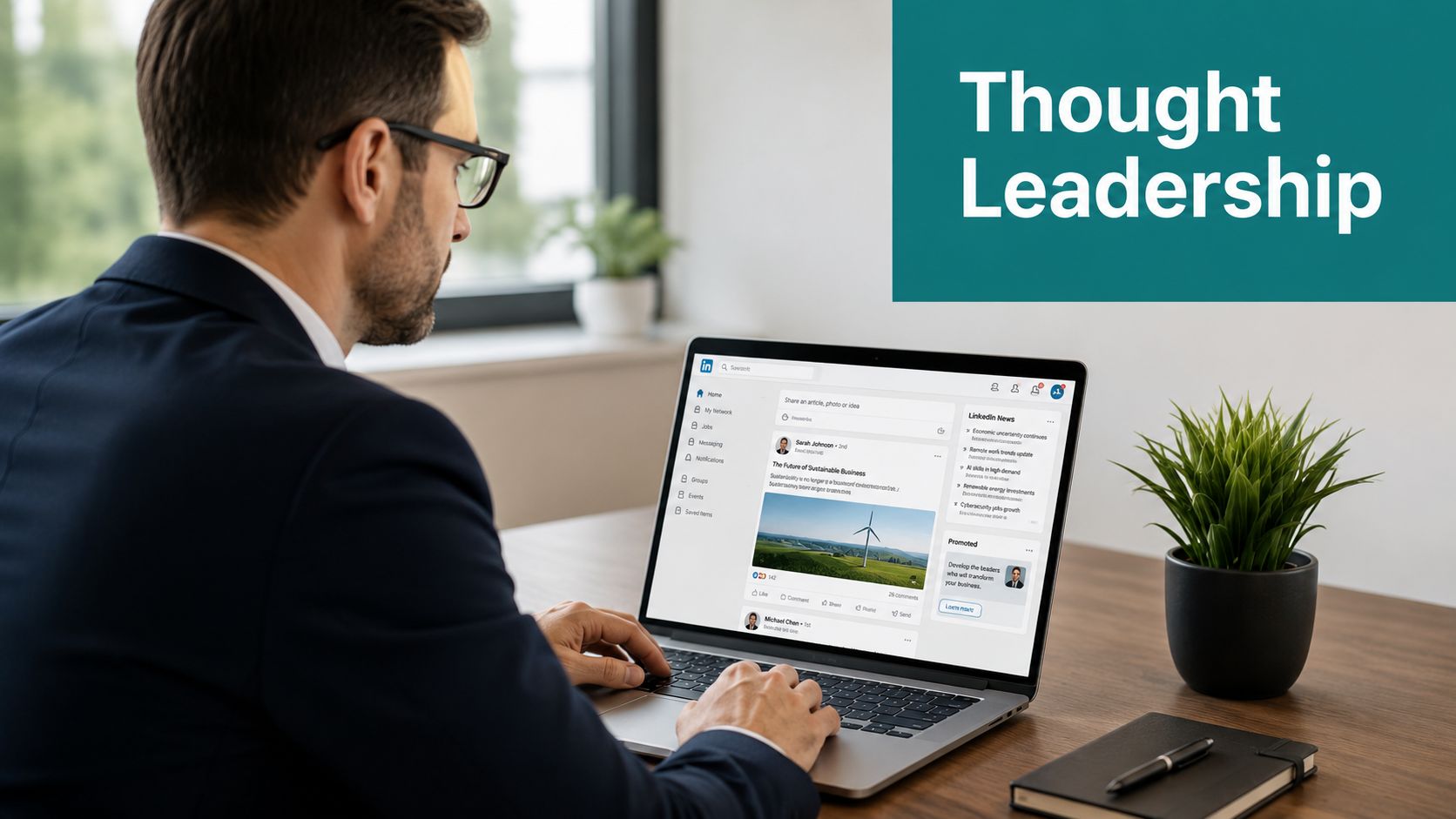
The strength of Sponsored Content is simple. It helps a business look credible before the sales call, quote request, or demo ever happens.
That makes it a strong fit for thought leadership, market education, and early-stage awareness. A Cincinnati law firm can promote an article on HR compliance issues. A regional healthcare group can put practical patient education in front of employer decision-makers. A local B2B service company can use client results, process insights, or industry commentary to build familiarity over time.
What works in the feed
A common mistake we see from new advertisers is treating Sponsored Content like a billboard. Feed placement rewards relevance, not broad slogans. The ad needs a useful point, a clear opinion, or creative strong enough to stop the scroll.
Single Image Ads are often the cleanest starting point. Video can work well too, especially if the offer or topic needs more explanation. The trade-off is production effort. We usually recommend starting with a strong static concept if the team does not already have good video assets ready. If you're evaluating support for campaign setup, creative, and targeting, HDM's paid media services for growth marketing show how that work fits into a broader lead generation plan.
Practical rule: Lead with a business problem your audience already recognizes. "Reduce intake friction" will usually outperform "We offer end-to-end solutions."
Targeting is where Sponsored Content becomes more useful for local B2B advertisers. LinkedIn lets you narrow by job title, company size, industry, seniority, skills, and matched audiences. For a Cincinnati healthcare vendor, that can mean focusing on healthcare leaders with compliance-related skills instead of paying to reach a wider audience that looks good in a report but never converts.
The click is only part of the job. If the ad promises insight, the landing page or article has to deliver on that promise. We have seen solid click-through rates go nowhere because the destination page was too generic, too sales-heavy, or disconnected from the ad's message.
LinkedIn's own overview of ad formats is a useful reference if you want to compare what can run in-feed and how each option is structured: LinkedIn Marketing Solutions ad formats.
A quick walkthrough helps if you're unfamiliar with setup and creative options:
<iframe width="100%" style="aspect-ratio: 16 / 9;" src="https://www.youtube.com/embed/XtWRX6jftr8" frameborder="0" allow="autoplay; encrypted-media" allowfullscreen></iframe>2. InMail Ads (Sponsored InMail) Best for High-Value Offers and Direct Engagement
Some offers don't belong in the feed. If you're inviting a narrow list of business owners to a workshop, offering a consultation, or promoting a time-sensitive event, direct inbox placement can make more sense than asking people to stop scrolling and click.
Sponsored Messaging, formerly called InMail, sends your message into a LinkedIn user's inbox. According to Evenbound's overview of LinkedIn ad formats, campaign delivery requires a minimum audience size of 50,000 and caps a target set at 100,000 people, with send costs ranging from $0.75 to $1.50 per send. That same breakdown notes this format can produce 2.5x higher click-through rates than Sponsored Content for time-sensitive offers.
That trade-off matters. Inbox ads are more intrusive, so your message has to justify the interruption.
When inbox ads make sense
A good local example is a law firm inviting founders to a business risk webinar. Another is a healthcare organization sending a limited-seat invitation for an employer wellness session. We've also seen this logic work for specialized audits, strategy consultations, and executive briefings where the target list is narrow and the value is obvious.
What doesn't work is blasting a generic sales pitch. If the first line reads like a canned outreach sequence, response quality drops fast.
Keep the message short, personal, and centered on one action. If you ask someone to read a long pitch, watch a video, download a guide, and book a call, you've already lost them.
A simple structure tends to work best:
- Specific subject line: Name the topic or benefit, not your company.
- Clear local relevance: Mention the business problem you're solving for firms in Cincinnati, Northern Kentucky, or Dayton if that's your service area.
- One CTA: Reserve a spot, schedule a consultation, or request the audit.
There's another practical issue owners should know. Sponsored Messaging isn't ideal for broad brand awareness. It's better for middle and bottom-of-funnel campaigns where your offer is concrete and your targeting is tight. If your service has a long sales cycle but a high contract value, that's where this format starts to earn its keep.
3. Lead Gen Forms (Sponsored Content with Built-In Lead Capture) Best for Quick Lead Generation
A Cincinnati owner clicks into LinkedIn Ads, wants leads fast, and does not want to send prospects through three extra steps just to request a consultation. That is the case for Lead Gen Forms. They keep the conversion inside LinkedIn and pre-fill contact details from the user's profile, which usually cuts drop-off compared with sending cold traffic to a separate landing page.
That convenience is the primary advantage. RedactAI's LinkedIn lead generation expertise covers why this format keeps showing up in serious B2B lead generation plans. We see the same pattern in local campaigns. If the offer is clear and the audience is well-defined, Lead Gen Forms can help Cincinnati companies get inquiries without asking prospects to do extra work.
Where this format fits best
This works especially well for offers with clear business value and a short decision path. A commercial HVAC company in Cincinnati could offer a facility efficiency assessment. A manufacturing firm in West Chester could promote a plant tour or capability review. A law firm downtown could run a lead magnet around employment policy updates for HR teams.
The form itself should stay tight. Every added field lowers completion rate, so ask only for information your team will use in follow-up. Name, email, company, and one qualifying question is often enough.
A practical setup usually includes:
- One clear offer: Audit, consultation, guide, demo, or event registration.
- Few form fields: Collect the minimum needed to qualify and respond.
- A real follow-up workflow: Send submissions into your CRM and assign ownership immediately.
- Thank-you page planning: Give the prospect a next step, not a dead end.
Local businesses often get tripped up. They launch the form, see names come in, and assume the campaign is working. Then sales waits two days to respond, nobody tags lead source correctly, and the team cannot tell which offers produced real opportunities. We usually recommend tying LinkedIn form campaigns to a data-driven marketing strategy for lead quality and attribution before increasing budget.
The best Lead Gen Form is the one that produces leads your team can contact quickly and close profitably.
Lead Gen Forms are also a practical option for smaller Cincinnati companies whose website is still being improved. You can start collecting demand now, test offers, and learn which audiences respond before investing more in landing page development. That said, lower friction can also bring in lower-intent leads, so targeting and follow-up standards matter just as much as the form itself.
4. Carousel Ads Best for Showcasing Multiple Products, Services, or Case Studies
A Cincinnati owner often hits this problem fast on LinkedIn. One ad needs to explain three service lines, show proof, and still give a busy buyer a reason to click. A single image usually cannot do that cleanly.
Carousel Ads solve that specific problem. They let you tell a connected story card by card, which makes them useful for companies with multiple offerings, longer sales cycles, or proof that works better in sequence.
For local businesses, that creates real flexibility. A Tri-State manufacturer can show distinct production capabilities. A healthcare practice can separate specialties by audience need. A law firm can turn one broad topic, such as contract risk or employment disputes, into a series of short, focused points that feel easier to process in the feed.
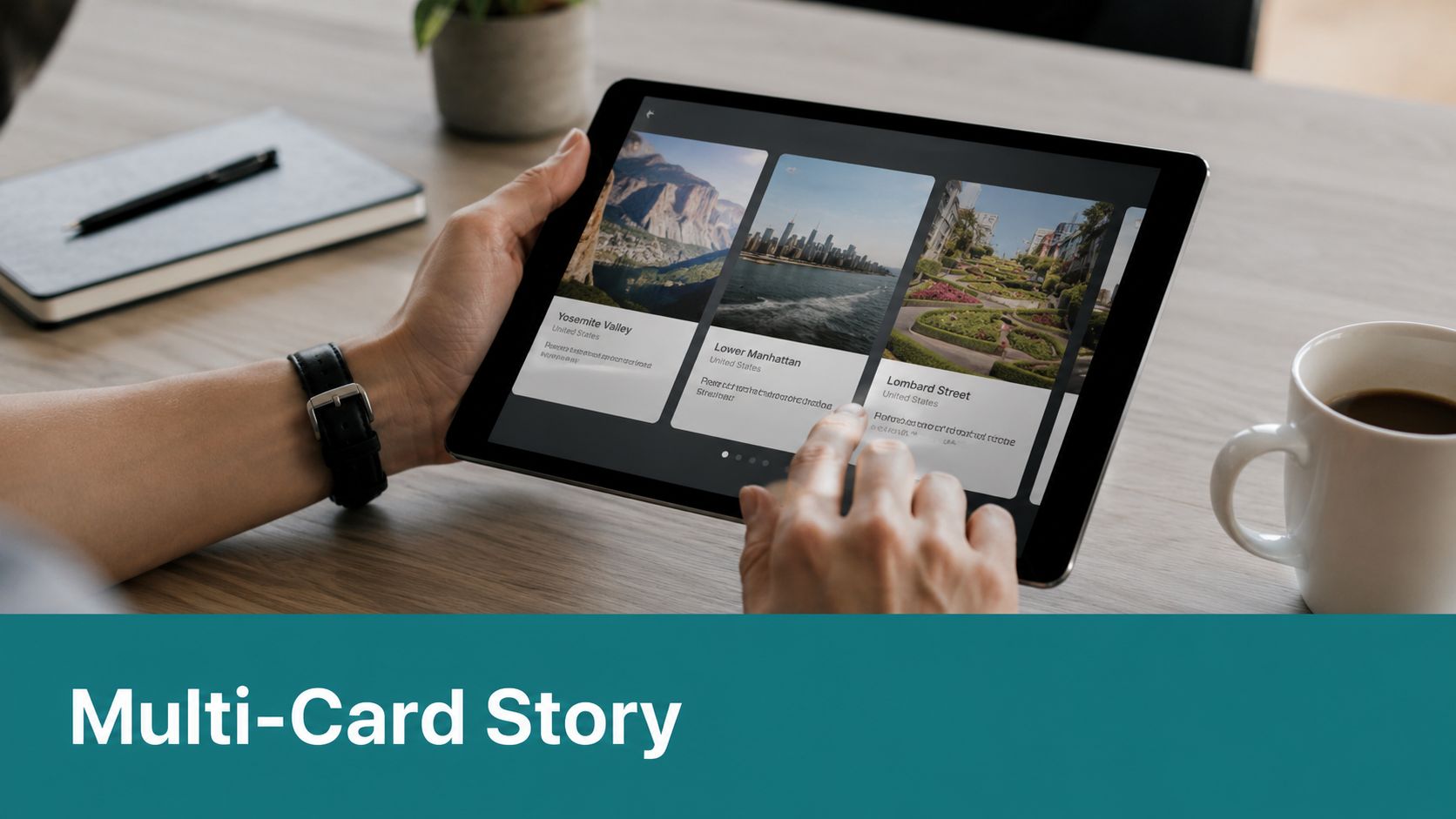
Where Carousel Ads shine
Carousel works best when the prospect needs a little more evidence before taking action. We use it most often for service breakdowns, before-and-after case studies, process explanations, and industry-specific examples.
HDM could run a carousel featuring five e-commerce builds, with each card focused on one business issue: site speed, mobile usability, product filtering, cart friction, or conversion path cleanup. That gives a Cincinnati retailer a clearer view of the work than one general brand image ever could.
Sequence matters here. The first card has to earn the swipe. Middle cards should add proof, specifics, or examples. The last card should make the next step obvious.
A few practices improve performance:
- Make card one carry the campaign: If the first image or headline is weak, the rest of the carousel does not matter.
- Keep one audience and one message per ad: A carousel aimed at manufacturers should not suddenly switch to healthcare or nonprofit messaging halfway through.
- Use headlines that say something concrete: "Shorten quote turnaround" is stronger than "Industry solutions."
- Build each card to stand on its own: Some users will stop after card two. Each card should still make sense without the full sequence.
There is a trade-off. Carousel gives you more room, but more room often leads to clutter. Cincinnati companies with broad service menus are especially prone to this. They try to fit every capability into one ad, and the result feels scattered. Better campaigns pick one angle, such as "our manufacturing process," "three legal risks for growing employers," or "case studies by industry," and commit to it.
This format is usually stronger for education and consideration than for a cold, hard sell. It helps prospects compare, understand, and self-qualify before they click. That is why carousel can work well for B2B firms here in Cincinnati, where buyers often need a little context before they are ready to talk to sales.
One connected story wins. A stack of unrelated cards does not.
5. Video Ads (Sponsored Video Content) Best for High-Engagement and Complex Messaging
A Cincinnati owner scrolls LinkedIn between meetings, stops for 20 seconds, and finally understands what your company does. That is the job of video.
This format works well when the value is hard to explain in a single image or short block of copy. For local businesses, that often includes custom development, patient intake workflows, legal process, industrial production, and other services where the buyer needs to see steps, hear context, or watch the before-and-after.
Video earns attention because it can show the process instead of merely describing it. For a healthcare group, that might be a short walkthrough of the patient journey. For a law firm, it could be an attorney explaining the first three steps in a business dispute. For a Cincinnati manufacturer, it might be footage of the production floor paired with a clear explanation of quality control, turnaround time, and capacity. HDM can use the same format to show a website rebuild, with direct commentary on speed, usability, and conversion improvements.
The first few seconds decide whether the ad gets watched at all. Open with the problem, not your logo animation.
A clear video with a specific point will usually outperform a polished video that says very little.
The videos that perform best on LinkedIn usually share a few traits:
- Lead with a real business issue: Low lead volume, slow quote requests, poor mobile experience, confusing intake, inconsistent branding.
- Design for silent viewing: Add captions immediately and make the visuals easy to follow without audio.
- Keep the message tight: One topic per video is usually enough.
- End with one next step: Book a consult, request a demo, download a guide, register for the webinar.
There is a trade-off. Video asks for more planning, more approvals, and better creative discipline than a static ad. We see Cincinnati companies get into trouble when they spend heavily on production before they know what message the market cares about. A simple talking-head clip from a credible expert, paired with sharp editing and a clear CTA, often beats an expensive brand video built for broad awareness.
LinkedIn itself recommends building video creative for fast attention and clear messaging in-feed, which lines up with what we see in live campaigns across B2B accounts in this market (LinkedIn video ad tips). Video is especially useful in the middle of the funnel, where prospects need more context before they are ready to talk to sales.
Use video when the buyer needs to understand, not just notice. That is where this ad type earns its keep.
6. Document Ads (PDF, Infographics, and Carousel Documents) Best for Lead Generation and Thought Leadership
Document Ads are one of the more underrated types of LinkedIn advertising. They let you put a PDF or similar file directly into the feed so people can preview the content without leaving the platform.
That matters for B2B buyers who want substance before they take the next step. According to LinkedIn's ads guide for feed formats, Document Ads allow users to preview PDFs directly in the feed, and those documents can support previews of up to 300 pages. For service businesses, that makes the format a strong fit for guides, reports, playbooks, and educational assets.
Best uses for Cincinnati service businesses
A law firm can publish a business owner's guide to liability protection. A healthcare organization can share a patient data security checklist. A Cincinnati agency can offer a report on website performance, SEO gaps, or e-commerce conversion issues.
The format works best when the document has real value on its own. Thin brochures usually disappoint. Good documents teach, compare, clarify, or help a buyer evaluate a problem more intelligently.
Here are the practical guardrails:
- Design for skimming: Strong headings, short sections, charts or visuals where helpful.
- Put your branding in the right places: Cover, footer, and final CTA page.
- Decide upfront if you want reach or leads: An ungated preview can build trust. A gated asset can capture contact info.
Document Ads also suit firms with long buying cycles. If your prospect won't book a consultation from a cold first touch, a well-structured document can bridge that gap. It gives them something useful to review internally and gives your team a reason to follow up with context instead of a generic sales email.
One caution. Don't publish a document just to say you have one. If the content reads like recycled website copy, people won't engage, and your sales team won't get much value from the leads that do come in.
7. Event Ads and Webinar Promotion Best for Driving Registrations and Building Community
A Cincinnati manufacturer wants to get in front of plant managers. A law firm wants business owners in the room before a compliance issue turns urgent. In both cases, asking for a sales meeting too early usually falls flat. An event gives prospects a lower-pressure way to engage.
That is where LinkedIn Event Ads earn their place. They promote webinars, workshops, roundtables, and in-person sessions directly in the feed, which makes them a practical fit for businesses selling expertise, trust, or complex services. We often recommend them when the audience needs education before they are ready to talk to sales.

Local examples that make sense
A Cincinnati law firm might run a webinar on contract risks for growing companies. A healthcare provider could host an employer-focused session on benefits communication or workforce wellness. HDM could promote a local workshop on website performance, lead quality, or paid media planning for service businesses in the region.
The topic has to be specific. "Join our marketing webinar" is weak because it asks for time without promising a clear payoff. "How Cincinnati service businesses can reduce website drop-off and improve lead quality" gives the right audience a reason to register.
A few practical details make or break these campaigns:
- Start promotion early: Busy professionals often need more than a few days to commit, especially for in-person events.
- Target for attendance quality, not volume: Owners, directors, VPs, and department leaders usually produce better follow-up opportunities than broad job function targeting.
- Match the format to the audience: A 30-minute webinar works for busy executives. A breakfast briefing can work better for local relationship-building.
- Have a follow-up plan before launch: Send the recording, slides, or summary quickly, and give attendees a logical next step.
Budget matters here because event campaigns often include more than ad spend. You may also be covering production, speakers, registration tools, and post-event follow-up. If you need a benchmark before committing dollars, this breakdown of online advertising cost considerations for growing businesses is a useful starting point.
One caution. Do not turn the event into a sales pitch. The strongest webinar campaigns teach something useful, answer real questions, and make the next conversation feel earned.
For Cincinnati businesses, that community angle matters. A well-run event can generate registrations, but it can also build familiarity with the buyers, partners, and referral sources you want to stay in front of over time.
LinkedIn Ad Types, 7-Point Comparison
| Ad Format | Implementation complexity | Resource requirements | Expected outcomes | Ideal use cases | Key advantages |
|---|---|---|---|---|---|
| Sponsored Content (Native Ads) | Moderate, craft compelling feed-style creative and targeting | Creative assets (image/video), copywriting, targeting budget | Brand awareness, engagement, steady lead flow | Thought leadership, case studies, company updates | Non-intrusive native format; high engagement; builds credibility |
| InMail Ads (Sponsored InMail) | Low–Moderate, message design and precise targeting | Personalized copy, higher cost-per-send, targeted audience lists | High open rates and direct responses; qualified leads | Exclusive invites, high-value offers, consultations | Very high open rates; direct inbox delivery; premium feel |
| Lead Gen Forms | Low, simple campaign setup with form fields and CRM mapping | Ad creative, CRM integration, moderate budget | Fast lead capture with higher conversion rates | Webinars, demos, consultation bookings, gated offers | Auto-filled fields; reduced friction; direct CRM integration |
| Carousel Ads | High, design and copy for multiple cohesive cards | Multiple images/videos, design resources, sequencing strategy | Enhanced engagement and storytelling; product/service showcase | Portfolios, multi-product promotions, sequential case studies | Multi-card storytelling; interactive user engagement; flexible messaging |
| Video Ads | High, produce and optimize short, attention-grabbing videos | Video production, captions, editing, higher media spend | Strong engagement and consideration; longer attention spans | Product demos, testimonials, educational content | Emotional impact; significantly higher engagement than static ads |
| Document Ads | Moderate, create substantive, well-designed multi-page assets | Research/writing, professional design, optional gating/CRM | Lead generation and thought leadership; gated downloads | Whitepapers, reports, guides, case studies | High perceived value; authority building; optional email capture |
| Event Ads & Webinar Promotion | Moderate–High, event setup, promotion, and follow-up required | Event platform, hosts/presenters, promotional creative, reminders | Registrations, community building, qualified attendee leads | Webinars, workshops, conferences, product launches | In-platform registration and reminders; attendance tracking; high intent leads |
Choosing Your First LinkedIn Ad A Practical Next Step
You don't need to master all seven ad types overnight. Most Cincinnati business owners shouldn't try. The right first move is matching one format to one clear goal.
If your priority is visibility and credibility, start with Sponsored Content. It helps you show up in the feed where prospects already spend time, and it gives you room to test messaging around your expertise. If your service is complex, Video Ads or Document Ads can help you explain it more clearly than a short sales page ever could.
If your priority is leads, keep things simpler. Lead Gen Forms are often the easiest path to initial traction because they reduce friction. Event Ads can also work well if your audience needs education before they're ready for a consultation. For higher-value offers with a narrow audience, Sponsored Messaging can be effective, but only when the outreach feels relevant and specific.
Budget is where many owners get stuck. LinkedIn isn't the cheapest platform, and it shouldn't be treated like one. Costs can run higher than other social channels, but LinkedIn also tends to attract buyers with stronger professional intent. For many B2B firms, that trade-off makes sense, especially when the sale value is meaningful and the targeting is disciplined.
A small, well-run test beats a broad, messy launch. Start with a modest budget, one audience segment, one offer, and one primary conversion goal. Then look closely at what happened after the click. Did the right people engage? Did leads match your sales criteria? Did your team follow up quickly enough to convert interest into pipeline?
Those questions matter more than vanity metrics. A campaign that generates fewer but better leads is often the better investment.
If your business is weighing LinkedIn alongside website improvements, SEO, or broader paid media, the pieces should connect. Your ad creative, landing experience, conversion path, and follow-up process all affect performance. That becomes even more important if you're promoting webinars or educational events. If that's on your roadmap, this guide on how to maximize webinar registration and engagement is worth reviewing alongside your ad planning.
HDM is one Cincinnati-area option for businesses that want help connecting strategy, creative, tracking, and follow-up into one practical system. The goal isn't to run every format. It's to choose the one that fits your next business objective and execute it well.
If you're ready to turn LinkedIn from a networking platform into a real lead generation channel, talk with HDM. We help Cincinnati-area businesses build paid campaigns that connect with the right audience, support broader growth goals, and make sense alongside your website, SEO, and sales process.