If you're a Cincinnati business owner asking what a digital marketing agency costs, the realistic answer is about $3,000 to $10,000+ per month for an SMB engagement, with broader agency benchmarks landing at $5,000 to $50,000 per month. That number moves fast based on scope, competition, and how much strategy you need versus basic execution.
Most owners ask this after they've already wasted time on vague proposals, mystery packages, or someone telling them "it depends" without giving a real number. Fair enough. It does depend, but not in a way that should keep you in the dark. If you're hiring an agency in the Cincinnati market for SEO, Google Ads, content, web support, or a mix of channels, you need a straight answer on budget before you spend another minute in a sales call.
Your Guide to Digital Marketing Costs in Cincinnati
You get a proposal on Monday. It promises SEO, Google Ads, social media, content, and reporting. The price looks manageable. Three months later, your phone is not ringing more, your leads are not better, and you still cannot tell what you paid for.
That happens all over Cincinnati.
Local owners usually do not need a huge agency engagement to start. They do need a budget that matches the kind of market they are in. A Hyde Park dental office, a West Chester law firm, and a Blue Ash manufacturer are all buying digital marketing in the same city, but they are not buying the same level of competition, lead value, or sales complexity.
For a useful market baseline, Clutch's 2026 digital marketing agency pricing benchmark puts many agency engagements in the $5,000 to $50,000 per month range, with typical project work landing at $10,000 to $49,999. Cincinnati SMBs usually sit well below the enterprise end of that range, but they still need enough budget to cover real work. Strategy, execution, tracking, and optimization all cost money. If you are shopping in the $500 package range, you are usually buying task completion, not business growth.
Here is the straight answer. In Cincinnati, a serious small business budget often starts around the point where an agency can manage one primary channel well, or two channels with a tight scope. That might mean local SEO plus reporting for a neighborhood service business, or Google Ads plus landing page support for a legal practice. It rarely means every channel at once.
Budget by business model, not by wish list.
A practical way to sanity-check your spend is to compare it to your revenue goals and growth plan. One small business budgeting benchmark cited earlier recommends putting 5% to 15% of revenue into marketing, with higher percentages for companies trying to grow faster. The useful takeaway is simple. If you want aggressive growth in a competitive Cincinnati category, your marketing budget has to reflect that. If you only need steady lead flow in a narrower local niche, you can keep the scope tighter and spend more carefully.
Here is my recommendation. Start with the channel closest to revenue, fund it well enough to produce measurable movement, and add the rest after you have proof. For Cincinnati healthcare, legal, home services, and other high-value lead categories, underfunded marketing is usually more expensive than doing nothing because it burns months without producing enough data or lead volume to improve.
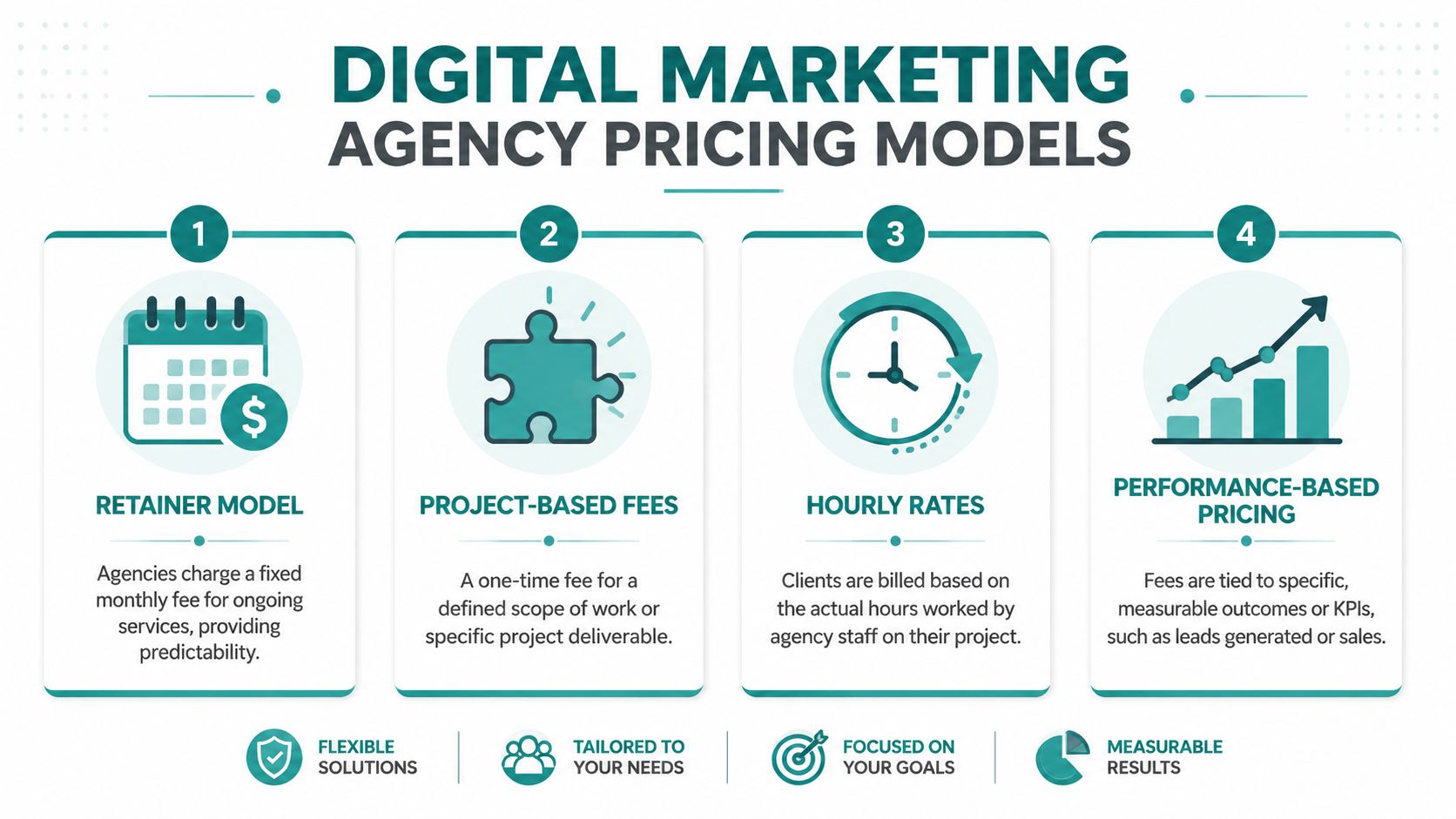
The Four Common Agency Pricing Models
A Cincinnati business owner usually sees the same four pricing setups on agency proposals. The model matters because it shapes behavior. It tells you whether the agency is being paid to stay involved, finish a defined job, sell hours, or chase a narrow result.
Pick the wrong structure and you can end up paying for motion instead of growth.
Retainers
Retainers are the standard choice for ongoing SEO, Google Ads management, content, email, reporting, and monthly optimization. You pay a fixed monthly fee for a defined scope.
For many Cincinnati SMBs, this is the right model if you need steady lead flow month after month. A law firm that needs signed cases every quarter or a multi-location clinic that needs consistent patient inquiries should not be buying random one-off marketing help. They need continuity, regular reporting, and someone making decisions every month.
What to like:
-
Predictable budgeting: You know the monthly number.
-
Ongoing improvement: Campaigns get adjusted instead of abandoned after launch.
-
Clear accountability: One team owns strategy, execution, and reporting.
What to watch closely:
-
Loose scopes: "Full-service marketing support" is not a scope.
-
Thin activity: Some retainers include very little actual work.
-
No strategic ownership: If the agency only sends reports and never brings recommendations, the retainer is overpriced.
My advice: ask for a monthly deliverables list, named channels, reporting cadence, and who is doing the work. If the retainer also depends on fixing site speed, forms, or landing pages, tie that into the cost of a Cincinnati business website redesign or rebuild so you are not surprised later.
Project-based fees
Project pricing works best when the work has a clear finish line. Common examples include website builds, analytics setup, tracking repairs, local SEO audits, landing page development, and rebrands.
This model is useful when you need a defined asset or a cleanup job before ongoing marketing starts. A Cincinnati medical practice may hire an agency for a HIPAA-conscious website rebuild and tracking setup. A local law office may hire one for a new intake landing page set and call tracking rollout. Those are projects.
The problem starts when agencies stuff ongoing work into a project proposal. "SEO setup" can mean title tags and a sitemap, or it can mean site architecture, redirect mapping, page copy guidance, schema, GBP work, and analytics configuration. Those are not the same thing.
If you buy project work, get the exact deliverables in writing. Ask what is included, what is excluded, how revisions are handled, and what happens after launch.
Hourly rates
Hourly billing has a place. It fits consulting, troubleshooting, development fixes, analytics repairs, and senior advisory work.
It is a practical option if you already have a marketing person in-house and just need outside expertise for a specific issue. It also works well when a Cincinnati business has a capable vendor stack but needs a specialist to fix conversion tracking, audit ad account structure, or review technical SEO problems.
Good fit:
-
Short-term technical fixes
-
Consulting and second opinions
-
Overflow work for an internal team
Bad fit:
-
Open-ended growth plans
-
Lead generation programs
-
Anything where the agency cannot define the hours before starting
If an agency suggests hourly billing for broad monthly marketing, push back. You should not be funding a learning curve forever.
Performance-based pricing
Performance pricing sounds attractive because it ties payment to results. In practice, it is the easiest model to manipulate.
An agency paid per lead has a reason to maximize lead count. Your business needs qualified leads, booked appointments, signed cases, or actual revenue. Those are different targets. A legal practice does not win because the phone rang more often. It wins because qualified prospects became retained clients. A healthcare group does not need junk form fills from outside its service area.
Use this model carefully. Define the conversion, the qualification standard, the tracking method, and who verifies the result. If you cannot audit the lead quality yourself, do not sign a performance deal.
For most Cincinnati SMBs, a clean retainer with hard KPIs and real reporting is safer than a cheap-sounding performance offer with bad incentives.
Key Factors That Determine Your Final Price
A Cincinnati business can get two proposals for what looks like the same job and see a monthly gap of several thousand dollars. That usually comes down to four things: how much work is included, how hard your market is, how much cleanup has to happen first, and what kind of agency you are paying for.
Scope drives the number
Scope is the first pricing filter. One location, one service line, and one clear channel costs less than a multi-location campaign with SEO, Google Ads, landing pages, content, reporting, and conversion work tied together.
This is why broad agency price ranges are not very useful on their own. You are not buying a vague "marketing package." You are paying for specific deliverables, technical setup, strategy time, creative production, and account management.
If your site also needs major fixes, include that in the budget conversation early. A weak site drags down every channel you pay for. Before you approve an agency plan, review the likely build or redesign cost against this Cincinnati website pricing guide.
Agency type changes what you are paying for
Agency pricing can swing hard even when the service list looks similar. As noted earlier in Digital Applied's 2026 pricing analysis, that spread usually comes from overhead, labor model, and client expectations more than a dramatic difference in output.
For a Cincinnati SMB, that matters.
A Hyde Park medical practice, Blue Ash law firm, or Mason home services company usually does not need the layers of meetings, approvals, and overhead built for national brands. You need smart execution, fast response times, clean tracking, and someone who understands how local buyers search and choose. If an agency charges like a national firm, it should bring national-level depth, process, and results.
Industry complexity raises cost fast
Some industries are expensive because mistakes cost money immediately.
Healthcare accounts need tighter handling around forms, patient privacy, review strategy, and provider-specific content. Legal marketing costs more because local search is crowded, clicks are expensive, and lead quality matters more than raw volume. A junk call is not a win for a Cincinnati law office. E-commerce requires feed management, platform troubleshooting, and tighter attribution. B2B campaigns usually need CRM integration and longer follow-up windows before anyone can judge lead quality.
Local context matters here too. A family doctor in Anderson Township and a downtown injury firm may both want leads, but their budget drivers are completely different. One needs trust, location accuracy, and patient-friendly content. The other needs aggressive local visibility, intake tracking, and tighter screening for case fit.
Your starting point affects first-month cost
A clean account costs less to improve than a messy one.
If your website is slow, your ad account is disorganized, your call tracking is missing, and your Google Business Profile has not been touched in a year, the first phase will cost more because the agency is fixing problems before it can produce growth.
A cheap proposal often looks cheap because it ignores the cleanup work your business needs.
That is also why smart Cincinnati buyers ask one blunt question during the proposal review: what are you fixing in month one before you start claiming performance gains? If the answer is vague, the price is probably hiding work that will show up later as a change order, a "recommended add-on," or a disappointing first quarter.
Senior talent should stay on strategy work
Agencies now use automation to reduce time spent on repetitive tasks like drafting basic content or building routine reports. Good. That should lower labor on low-value production work.
It should not lower the amount of senior thinking on strategy, technical SEO, analytics, CRO, or channel decisions. Those are still the parts that move revenue. In Cincinnati, that means your budget should favor work that improves booked appointments, signed cases, qualified calls, or closed deals, not padded reporting hours or generic content volume.
Example Digital Marketing Budgets for Cincinnati Businesses
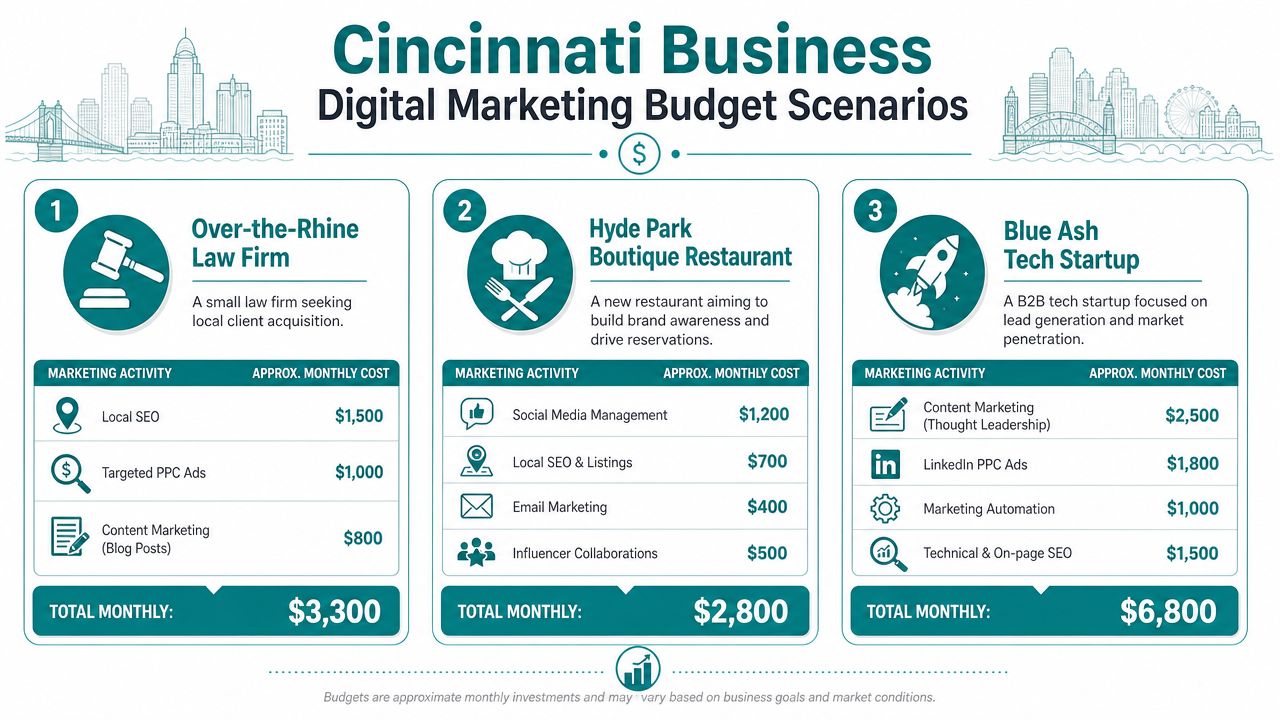
A Cincinnati owner usually hits this section after getting two proposals that barely look related. One says $2,000 a month and promises "full-service marketing." Another comes in at $8,500 plus ad spend and suddenly adds call tracking, landing pages, CRM setup, and reporting. The gap is not random. It reflects scope, local competition, and how serious the agency is about producing leads you can close.
Over-the-Rhine law firm
A small law firm in Over-the-Rhine should budget differently than a general local service business. Legal leads are expensive, intake quality matters, and one signed case can justify a much higher monthly spend than a lower-ticket business.
A practical proposal for a firm focused on one or two practice areas often includes:
-
Local SEO: Practice area pages, Google Business Profile management, review generation, citation cleanup
-
Google Ads: Tight keyword targeting around high-intent searches and strong negative keyword control
-
Content support: FAQ pages and articles that answer client questions and help conversion
-
Tracking: Call tracking, form tracking, and intake source reporting
A lean but serious program usually starts around the mid four figures per month, before ad spend. If the firm wants personal injury, criminal defense, and family law campaigns running at once across Cincinnati and nearby suburbs, the budget climbs fast. It should. Broad legal coverage without proper budget usually produces junk leads and wasted clicks.
Here is what a sample monthly proposal might look like for a Cincinnati legal SMB:
| Line item | Monthly range |
|---|---|
| Local SEO and content updates | $1,500 to $3,000 |
| Google Ads management | $1,500 to $3,500 |
| Landing page support | $500 to $1,500 |
| Tracking and reporting | $300 to $800 |
| Ad spend | $2,500 to $10,000+ |
If your average case value is high, underfunding paid search is a mistake.
West Chester e-commerce brand
A West Chester e-commerce company needs a different plan. Revenue comes from product margin, conversion rate, repeat purchase rate, and clean attribution. Traffic by itself does not matter.
A workable engagement usually combines:
-
Paid search and shopping campaigns
-
Technical and on-page SEO for product and collection pages
-
Email campaign support
-
Analytics and conversion rate optimization
-
Creative testing for landing pages, offers, and product messaging
As noted earlier, national agency pricing benchmarks can make local proposals feel more reasonable once you see the full workload behind them. In Cincinnati, a real e-commerce program is rarely a bargain retainer. It needs channel management, feed work, testing, and reporting discipline.
If you are comparing paid media proposals, review this guide to online advertising cost for local businesses before you sign.
A sample monthly e-commerce budget might look like this:
| Line item | Monthly range |
|---|---|
| PPC and shopping management | $2,000 to $5,000 |
| SEO support | $1,500 to $4,000 |
| Email marketing | $750 to $2,000 |
| CRO and analytics | $1,000 to $3,000 |
| Ad spend | $3,000 to $20,000+ |
Cheap e-commerce management usually means weak testing, bad tracking, or both.
Multi-location dental practice
A multi-location dental group around Greater Cincinnati has more moving parts than a single-office practice. The agency has to support each location, route leads correctly, protect form handling, and report on booked appointments by office. That adds work, and the budget should reflect it.
The proposal should usually include:
| Area | What matters |
|---|---|
| Local SEO | Separate location pages, map visibility, review support |
| Paid media | Campaigns built around treatments, insurance-related queries, and location intent |
| Website support | Fast pages, mobile conversion paths, appointment forms |
| Compliance awareness | Careful handling of forms, messaging, and data collection |
| Reporting | Calls, booked appointments, and source-level visibility |
For a Cincinnati dental group with two to five offices, a realistic monthly proposal often breaks down like this:
| Line item | Monthly range |
|---|---|
| Multi-location SEO | $2,000 to $4,500 |
| Paid media management | $1,500 to $4,000 |
| Website and landing page support | $750 to $2,000 |
| Reporting and call tracking | $400 to $1,000 |
| Ad spend | $2,000 to $8,000+ |
This type of engagement sits above a simple local retainer because the agency is handling more pages, more location signals, and more operational detail.
A Cincinnati agency with healthcare, legal, and growth marketing experience, such as HDM, can handle that kind of cross-channel work. The key question is simpler. Can the agency show you exactly what gets done each month, what each service is for, and how the work ties back to appointments, cases, or sales? If not, the proposal is not ready.
How to Measure Your Digital Marketing ROI
You sign a $4,000 monthly agency agreement, the phone rings more, and the report looks busy. Three months later, you're still asking the only question that matters. Did this produce profitable business in Cincinnati, or did it just produce activity?
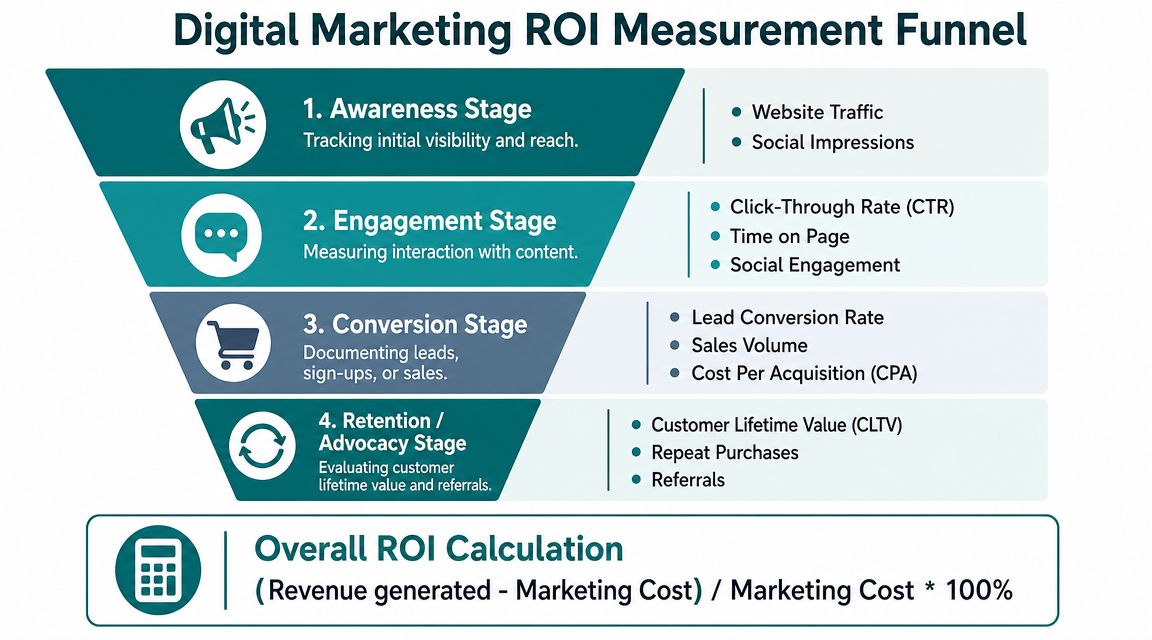
ROI gets clearer once you stop grading marketing on traffic and start grading it on revenue, margin, and sales quality.
Start with customer acquisition cost
Customer acquisition cost, or CAC, is your cost to get one new customer.
Use this formula:
- Customer acquisition cost: marketing cost divided by new customers acquired
If you spend $5,000 in a month and get 20 new customers, your CAC is $250.
That number becomes useful when you break it down by channel. A Cincinnati law firm might get expensive PPC leads that turn into high-value cases. A local dentist might get lower-cost SEO leads that book faster. The better channel is the one that produces stronger profit, not the one that produces the cheapest click or the most form fills.
Compare CAC to actual customer value
Now look at what that customer is worth.
For a home services company, that could mean the first job plus repeat work. For a healthcare practice, it could mean lifetime patient value. For a law firm, it could mean signed cases and fee revenue, not just consultations.
Use a simple standard:
-
Healthy ROI: acquisition cost leaves enough room for profit
-
Weak ROI: leads come in, but they do not close, do not stay, or do not produce worthwhile revenue
Plenty of Cincinnati businesses get misled. Agencies show impressions, clicks, and cost per lead. Owners need booked appointments, retained clients, closed jobs, and collected revenue.
Straight answer: if the agency cannot connect marketing work to sales outcomes, you do not have ROI reporting. You have channel reporting.
Set a budget based on growth goals
As noted earlier, small business marketing budgets need to match the growth target. A conservative company can spend conservatively. A Cincinnati business trying to add a second location, fill more provider schedules, or increase case volume needs a budget that supports that goal.
Do not judge ROI too early, either. SEO, content, and local visibility usually need time to build. Paid search can produce faster feedback. Good reporting separates short-term lead flow from longer-term asset building so you can judge both correctly.
A short video can help if you want the ROI conversation explained visually.
<iframe width="100%" style="aspect-ratio: 16 / 9;" src="https://www.youtube.com/embed/mPiWWnJsVGw" frameborder="0" allow="autoplay; encrypted-media" allowfullscreen></iframe>What to ask for in reporting
Ask for reporting that matches how your business makes money:
-
Lead quality: Which calls or forms turned into real opportunities?
-
Channel source: Did the lead come from SEO, Google Ads, Local Services Ads, social, or referrals?
-
Sales outcome: Did that lead become a patient, client, estimate, or sale?
-
Cost by result: What did each booked consult, signed case, or closed job cost?
-
Local visibility: Are you getting traction in the Cincinnati neighborhoods and service areas that matter most?
For local SMBs, that last point matters more than agencies admit. If you serve Hyde Park, Mason, West Chester, Blue Ash, or Northern Kentucky, your reporting should show where leads are coming from geographically. Broad metro traffic is not the same as demand in the zip codes you need.
If an agency cannot answer those questions clearly and consistently, the reporting is too shallow to trust.
Red Flags and Hidden Costs to Watch Out For
Some proposals look affordable until you read the fine print. Others sound confident because they're making promises no serious agency should make.
Red flags in the pitch
Watch for these:
-
Guaranteed rankings: No agency controls Google's algorithm, and no honest firm guarantees a #1 spot.
-
Vague deliverables: "SEO services" isn't a deliverable. Neither is "brand growth."
-
No mention of tracking: If the proposal doesn't explain form tracking, call tracking, analytics, or attribution, you're buying blind.
-
Long contracts with weak accountability: Commitment is fine. Being trapped isn't.
-
One-size-fits-all packages: A law firm, dental office, and e-commerce store should not get the same playbook.
If the proposal sounds polished but leaves you unclear on what the agency will actually do next month, that's a problem.
Hidden costs that show up later
A low retainer can hide a lot of extras:
-
Ad spend not included: Management fee and media budget are separate costs.
-
Landing pages billed separately: Sometimes necessary, but it should be clear.
-
Reporting platform fees: Some agencies charge extra for dashboards.
-
Creative add-ons: Graphics, video, copy revisions, and photography may be excluded.
-
Website edits: Many marketing retainers don't include development support.
The cheapest option usually costs more
Cheap marketing often fails in expensive ways. Bad SEO can create cleanup work. Weak ad management wastes budget. Poor tracking makes you think a campaign failed when the reporting is just broken.
If you want a blunt rule, here it is. Don't buy on price alone. Buy on clarity, fit, and whether the agency understands how your business makes money.
Evaluating Proposals and Partnering for Growth
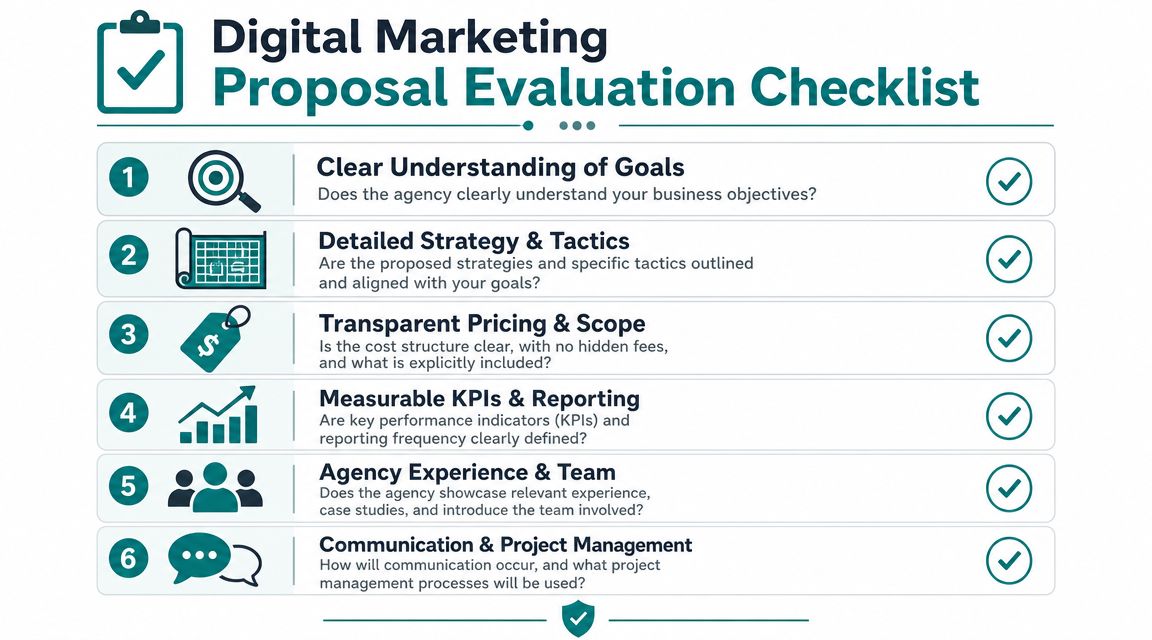
A strong proposal should help you make a decision, not create more confusion. If you're comparing agencies, judge the proposal like an owner, not like a marketer.
What a solid proposal includes
Look for these basics first:
-
Business goals tied to marketing work: More cases, more booked consults, more patient appointments, more online sales
-
Defined scope: Specific channels, deliverables, and responsibilities
-
KPIs that matter: Leads, booked calls, appointments, revenue, qualified traffic
-
Timeline: What happens in onboarding, launch, and monthly management
-
Reporting cadence: Monthly review at minimum, with visibility into performance
If you want a second opinion while comparing options, this guide on how to choose a digital marketing agency is a useful checklist.
Industry-specific proposal checks
Different businesses should look for different signs of competence.
For law firms
A legal marketing proposal should show local SEO understanding, intake awareness, and a plan for practice-area visibility. If it focuses on generic traffic and says nothing about qualified consultations, it's missing the point.
For healthcare providers
A healthcare proposal should reflect privacy concerns, form handling, content review needs, and multi-location visibility if relevant. If compliance-sensitive work is treated like standard retail marketing, move on.
For e-commerce brands
An e-commerce proposal should talk about tracking, shopping feeds, product-page performance, paid media structure, and retention support. If it skips analytics depth, it won't hold up once spend increases.
The right partner is transparent
The best agency relationship isn't built on hype. It's built on honest scoping, clean reporting, and a willingness to tell you when something isn't ready yet.
Ask direct questions:
-
What exactly are you doing each month?
-
Who is doing the work?
-
What happens in the first ninety days?
-
How will you prove this is working?
-
What isn't included?
If the answers are crisp, you're probably dealing with adults. If the answers are slippery, keep looking.
If you want a transparent quote for your Cincinnati-area business, HDM can build a proposal around your actual goals, whether that means SEO, paid media, web design, healthcare marketing, legal marketing, or a broader growth strategy. The right number isn't the cheapest one. It's the one tied to real scope, clear reporting, and revenue you can measure.